Breaking Barriers Award
2026 Nonprofit News Awards
Honors reporting that brought new understanding to an issue or topic affecting people or communities that are historically underrepresented, disadvantaged or marginalized, resulting in impactful change.
Jump to:
Travels with Corbett by Julie Reynolds, Mara J. Reynolds, Brenda Zorn
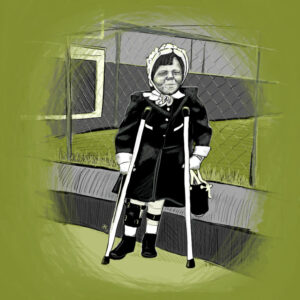
“Travels with Corbett” opens with a direct and candid perspective: “The world always wants us dead.”
The speaker, disability rights activist Corbett O’Toole, continues: “Disabled people know that, every day of our lives: The world doesn’t want us around and wants us dead.”
The story focuses on O’Toole, who lives in a van in the desert, part of a community of nomads. O’Toole reflects on her advocacy, including participating in the Section 504 sit-ins of the 1970s, protests that pushed for an end to discrimination in federally funded programs against people with disabilities.
O’Toole’s perspective is part of a broader focus on elder survivors of injustice and historical trauma.
“The storytelling was exceptional,” a judge wrote. “The way each individual’s story was presented offered real depth and perspective—I felt fully immersed in the lives of these brave individuals. It was also clear that the reporter took great care to build trust with the people featured, which made the work feel both thoughtful and deeply respectful.”
The piece captures the “intertwined history of the disability rights movement and folks involved in it now finding community in a contemporary nomad movement,” another judge wrote.
Travels with Corbett May 7, 2025
Full transcript
Missing Indigenous Girls by Chelsea Curtis
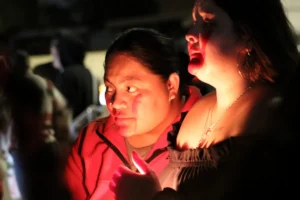
The main headline reflects a premise and truths Arizona Luminaria’s reporting revealed that one judge described as “gutting”: Emily’s Law wouldn’t have helped Emily.
Emily Pike was 14 years old and a member of the San Carlos Apache Tribe when she went missing in January 2025. She was later found dead.
An Arizona legislator drafted a bill meant to create an alert system for missing Indigenous people and named it in her honor — the Emily Pike Law, now known as Emily’s law. But as Arizona Luminara revealed through reporting, provisions of the law, such as an age limitation, would not have applied to Emily’s disappearance.
Chelsea Curtis’ “data analysis provided irrefutable proof of the law’s failures,” a judge wrote. The reporting also had an immediate impact, including revisions to the legislation. The coverage also “prompted immediate action in two cases overlooked by the system, resulting in two missing children being found safe,” the judge noted.
Emily’s Law wouldn’t have helped Emily: Proposed Arizona alert highlights gaps for runaway youth April 17, 2025
Arizona’s missing person alert bill amended to address exclusion of Emily Pike’s case May 1, 2025
Runaway label concerns raised at bill signing ceremony for alert law named to honor Emily Pike May 22, 2025
Turquoise Alert used once since July launch despite hundreds missing in Arizona Oct. 24, 2025
No Turquoise Alert for Navajo teen amplifies questions about Arizona’s new missing person system Nov. 6, 2025

To report on shadowbans on social media, Fuller staff had to work around onerous barriers: algorithms. The staff examined how social media platforms remove or restrict content from creators who focus on bodies, sex and sexuality for educational or health-focused purposes. Sometimes, those creators’ content or their accounts are removed. Sometimes their reach to non-followers is limited.
Those restrictions and censorship disproportionately affect creators from marginalized communities, including those who are women or LGBTQ+. The content, creators contend, is reliable information of genuine educational value.
“The originality of this effort to break through social media filtering makes it worthy of a Breaking Barriers award,” a judge wrote. “The journalists and creators involved found a way to beat the algorithms and undercut censorship of information about sexual health issues, often in places that need it the most.”
These creators help millions of people talk about bodies, sex and sexuality. Their content is being removed because of it July 28, 2025
Instagram video component July 28, 2025
Americans by Name, Punished for Believing It by Alex Burness
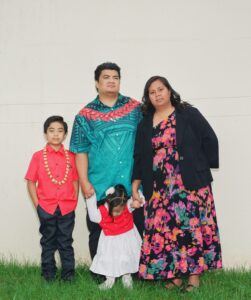
American Samoans are American by birth, but still denied the full rights and privileges of citizenship — a status Bolts and High Country News explored in coverage one judge praised as “superb journalism.”
As U.S. nationals, American Samoans pay taxes, owe “allegiance” by law to the United States, and can join or be drafted into the military, the news outlets reported. They also are residents of the only U.S. state or territory where people are born without automatic citizenship, and without the right to vote in state, federal, and most local elections anywhere outside of the island.
The investigation follows American Samoan residents in Whittier, Alaska, who face felony charges for voting despite believing they were eligible.
The piece “brings the reader directly into this family’s life and the devastating effects of these policies,” a judge wrote.
Americans by Name, Punished for Believing It Jan. 8, 2026
2026 Nonprofit News Awards

Know what’s new in nonprofit news.
Receive our weekly INNovation newsletter that explores the latest in nonprofit news - from INN's expert insights and research to what's new in the industry, plus job opportunities and invitations to events.
"*" indicates required fields